Recycled Steel Frames: Building Green, Australian-Style
Building a new home, especially as an owner-builder, means you're making a stack of decisions. And look, it's not just about the layout or picking a nice colour for the gutters. It's about what your home actually is, what it's made from, and what impact that has down the track. You've probably already sussed out kit homes are a ripper option for getting more bang for your buck and having a real say in the build. But have you really thought about the environmental side of things, specifically with the bones of the house?
We're talking steel frames here, BlueScope Steel to be exact. And yeah, they're strong, termite-proof, straight as a die – all that good stuff. But a massive part of their story, one that often gets overlooked, is just how green they are. It’s not just some marketing fluff; it’s genuinely about building a home that leaves less of a footprint.
The Raw Truth: Steel's Circular Life
When you're choosing materials for your kit home, you want to pick stuff that's going to last. No one wants to be ripping out rotten timber in 15 years, right? Steel ticks that box hard. But here's the kicker: steel is endlessly recyclable. Not 'mostly' recyclable, not 'some bits of it', but endlessly. You could melt down a steel frame from a house built in the 70s and turn it into another frame today, or a car, or a washing machine. And it wouldn't lose any of its strength or integrity.
Think about that for a second. That old ute down the road, the one rusting away? Its steel could end up as part of your new living room wall. It's a pretty powerful idea, this circular economy. Timber, while renewable, has a definite end-of-life once it's been through a few cycles. Concrete is even worse – a massive carbon footprint upfront and then it just sits there, an inert lump, at the end. Steel, though, it keeps giving back.
In Australia, we're actually pretty good at this. We’ve got a well-established scrap metal industry. So, when a building eventually comes down, that steel usually gets collected, processed, and sent off to be remade. It doesn't just pile up in landfill. That’s a huge win, especially when you consider how much waste building sites generate.
Less Waste on Site, More in Your Pocket
Anyone who's been on a building site knows it can look like a war zone. Piles of offcuts, packaging, all sorts. It's a real headache for owner-builders, too. You've got to sort it, pay to get it picked up, or haul it to the tip yourself. It’s a waste of time and money, not to mention the environmental impact of all that rubbish.
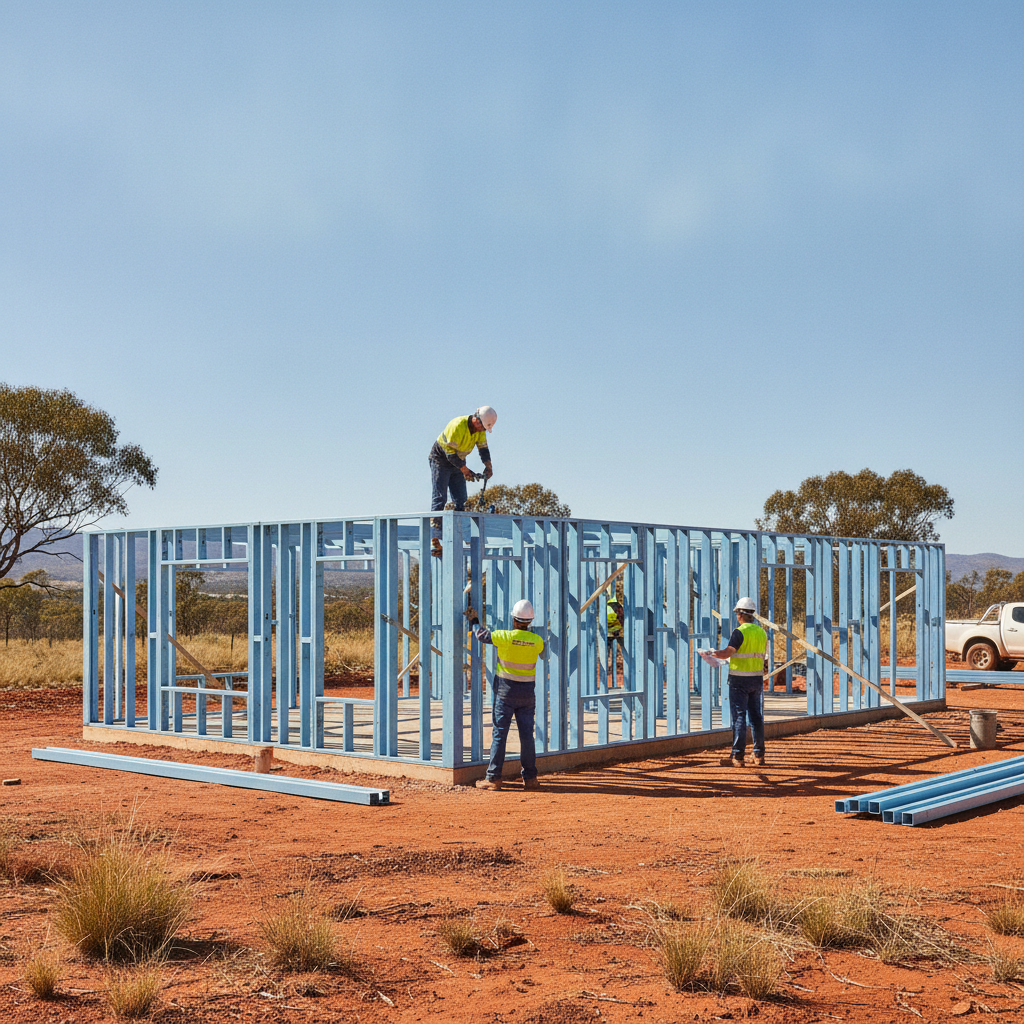
With a steel frame kit home, you're looking at significantly less waste generated on site. Why? Because the frames are precision-engineered. They’re cut to exact measurements in the factory, not on your block. When your kit arrives, you get what you need, with minimal offcuts. There's no 'oversizing' timber to then trim down, leaving bits everywhere.
This precision manufacturing means less scrap, less rubbish to deal with, and less demand on raw materials in the first place. Every gram of steel that goes into your frame has been carefully calculated. It's not just neat and tidy; it’s a direct environmental benefit. Less stuff going to landfill, less energy spent on transportation of waste. It’s practical, too. Less site mess means safer working conditions, which, as an owner-builder, is always front of mind.
Energy Efficiency and the Long Game
Okay, so recycling is a big tick. What about once the house is actually built and you're living in it? Steel frames play a part there, too, mainly through design flexibility and how insulation works. Steel is a stronger material for its weight compared to timber, which allows for larger spans and more open plan designs. This means you can design a house that makes better use of natural light and ventilation, cutting down on the need for air conditioning or excessive heating.
Plus, the straightness of steel frames ensures that your cladding and internal linings go on perfectly flat. Why does that matter for energy efficiency? Well, every little gap, every sag, every bit of unevenness in your walls or roof creates air leaks. Air leaks mean your expensive heated or cooled air is escaping, and outside air is getting in. A perfectly straight frame means your insulation and vapour barriers can perform at their absolute best, sealing up the building envelope tight as a drum. This isn't just theory; it translates directly into lower power bills for you.
Also, steel frames don't absorb moisture and aren't susceptible to shrinking, twisting, or warping like timber can be. This stability maintains the integrity of your building's thermal envelope over its entire lifespan. No gaps opening up later, no cracks for draughts to sneak through. It means your home stays energy-efficient year after year, without you having to go around patching things up because the frame has moved.
Durability: Building it Once, Building it Right
Environmental benefits aren't just about what materials are used or how much waste is generated. It's also about how long the product lasts. The longer a house stands, the less often new materials are needed to replace it. Steel frames, particularly those made from BlueScope Steel like TRUECORE, are incredibly durable.
Termites? Steel laughs at termites. They don't eat it, simple as that. In places like Queensland or Northern NSW, where those little munchers are a real menace, this is a massive advantage. No chemical treatments needed for the frame, reducing the use of nasty pesticides on your property. Rot and mould? Not an issue with steel. Fire? Steel is non-combustible. While extreme heat can affect its structural integrity, it won't add fuel to a fire or start one itself, which is a big plus for safety and building in bushfire-prone areas (always consult your BAL report and relevant standards like AS 3959, of course).
This inherent durability means less maintenance, fewer repairs, and a longer overall lifespan for your home. You're not just building for yourself; you're building for generations. And that long-term view is probably the greenest thing you can do – build something once, build it well, and make sure it lasts.
The BlueScope Steel Commitment
When we talk about steel frames, we’re talking about quality Australian steel. BlueScope Steel, the company behind the TRUECORE brand, has made significant commitments to reducing its environmental impact. They're investing in cleaner production methods, reducing energy consumption, and actively supporting the recycling loop. Knowing that the core of your kit home comes from a company with a strong focus on sustainability adds another layer of confidence to your build.
It's not just some random imported steel with questionable origins. It’s a product with a known lineage, a commitment to quality, and a focus on responsible manufacturing right here in Australia. That matters, especially when you're laying down your hard-earned cash and putting in all that effort as an owner-builder. You want to know you're getting a product that aligns with your values.
Practical Tips for the Environmentally-Minded Owner-Builder
So, you've decided on a kit home with a steel frame – smart move. Here are a few extra tips to really amp up the environmental benefits on your build:
- Waste Management Plan: Before you even start digging the footings, have a clear plan for your site waste. Separate your steel offcuts (there won't be many!), timber, plastics, and general rubbish. Contact local recyclers or waste management companies to arrange for separate bins. It's a bit more effort upfront, but it pays off for the planet and can sometimes even save you on tip fees.
- Insulation is Key: Don't skimp on insulation. Your steel frame provides an excellent, straight canvas for batts, blankets, and rigid boards. Get the highest R-values you can afford for your climate zone. Think about thermal breaks too – ask your supplier about ways to minimise thermal bridging through the steel frame itself.
- Water-Wise Choices: Beyond the frame, consider rainwater harvesting. Even a small tank can drastically reduce your reliance on town water for flushing toilets or watering the garden. Look at low-flow fixtures for taps and showers.
- Smart Glazing: Windows are a big culprit for heat loss and gain. Invest in good quality, double-glazed windows, especially on north and west-facing elevations. Shading, like eaves and pergolas, also plays a huge role in keeping your home cool without relying on air-con.
- Local Materials: Where possible, choose other materials that are sourced locally. This reduces the carbon footprint associated with transport. Your kit home frame is Australian, but think about your cladding, decking, and internal finishes too.
The Future is Framed in Steel
Building a home is a big deal, full stop. But building a home that's not just functional and beautiful, but also mindful of its impact on the environment, that's something else entirely. Choosing a steel frame kit home isn't just about getting a strong, straight house; it's about making a conscious decision for sustainability. It’s about building with a material that has a minimal environmental footprint upfront, creates less waste during construction, helps your home be more energy-efficient, and lasts for a bloody long time.
So, when you’re poring over those plans, thinking about where the couch will go, remember the bones of the house. Remember that steel frame. It's doing more heavy lifting than you might realise – not just holding up your roof, but helping to build a greener future, one Aussie kit home at a time.