Built Tough: Why Steel Frames are Your Best Mate in Cyclone Country
It's fair dinkum, living up north or anywhere along the Queensland coast, even parts of WA, you quickly learn what real weather means. That's not just a bit of rain, or a stiff breeze; that's cyclones, mate. They roll in, do their worst, and you want to know your house is going to be standing after it's all over. This isn't just about looking good, it's about the bones of the place. And when it comes to those bones, steel frames are a proper game-changer, especially in high-wind regions.
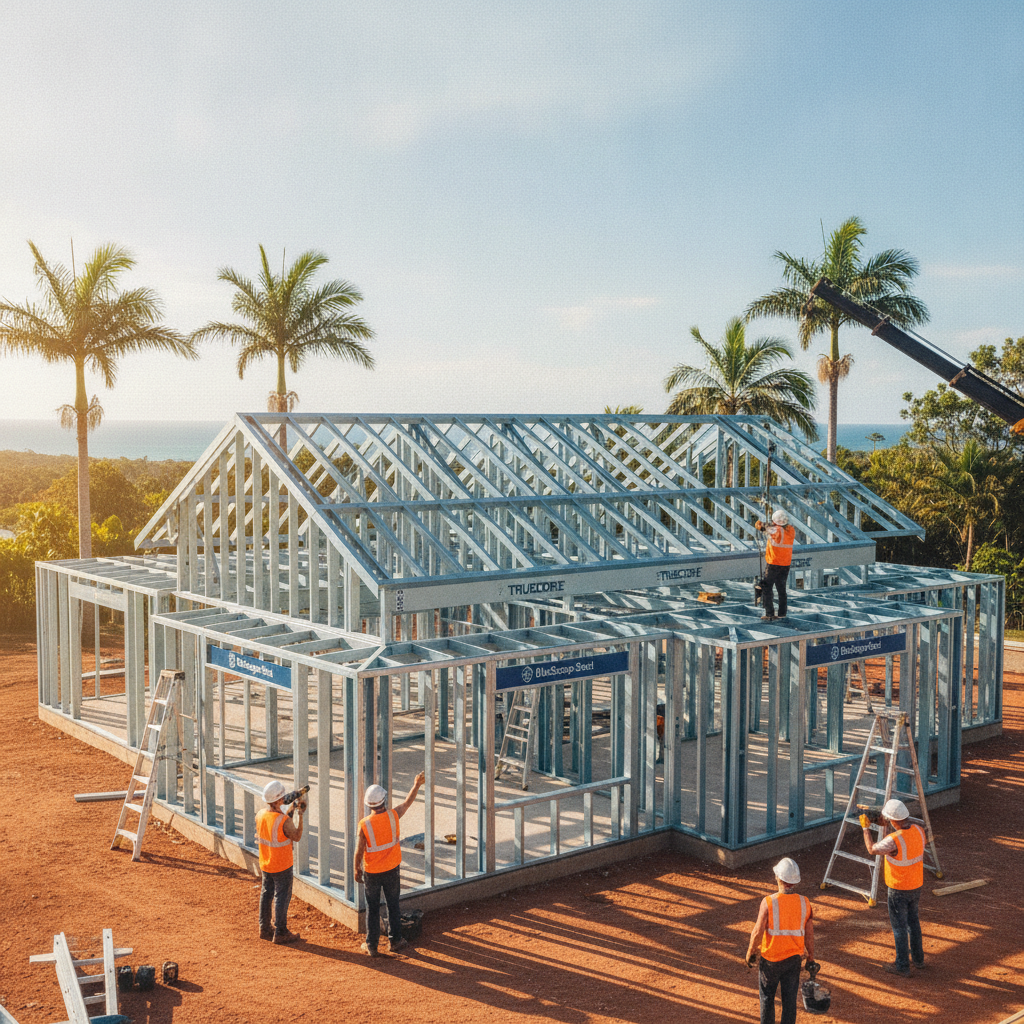
Now, we build kit homes, right? And we use BlueScope Steel, TRUECORE brand. That's not just a sales pitch, it's because it's good stuff, engineered to take a beating. For owner-builders like you, sussing out a kit home means you're already thinking smart about construction. So, let's get into why steel frames, particularly for those of you eyeing off a block in a cyclone-prone area, are just plain sensible.
Cyclone Ratings: Not Just a Guideline, It's the Law
See, every bit of Australia has a wind speed rating. Up around Cairns or Port Hedland, you're talking about Category 3 or 4 cyclone regions. That's where you need a house built for serious forces, a house that won't just crumple. Your local council, they don't muck around with this stuff. They'll want to see engineering certification that your kit home, once it's all put together on your slab, can handle whatever the skies throw at it.
With a steel frame kit, the engineering is generally baked right in. We've designed these frames to meet those stringent standards. We're talking specific bracing, heavy-duty connections, and framing members that are actually designed to twist and flex a bit under pressure without failing completely. You wouldn't build a sandcastle in a tsunami zone, would you? Same principle here. You need structural integrity that laughs in the face of a Category 5.
Engineering for Extreme Weather: It's All in the Details
When a cyclone hits, it's not just about the frame staying up. It's about everything staying connected to everything else. This means your roof trusses need to be properly tied down to your wall frames, and those wall frames need to be securely anchored to your concrete slab. Steel frames simplify this a lot.
Think about it: steel is predictable. Its strength is consistent. You're not dealing with knots or grain inconsistencies you find in timber. Our frames come pre-engineered, precisely cut and punched. Those connections points? They're designed for high-tensile bolts and specific bracing straps. This isn't just 'good enough', this is 'engineered to Australian Standards' good. We're talking about AS/NZS 4600 Cold-Formed Steel Structures, which is the bible for this sort of thing.
The entire structure acts like a unified system, distributing those extreme wind loads right down into your foundation. That's peace of mind you can't put a price on. Plus, the lighter weight of steel compared to traditional heavy timber can sometimes mean less dead load on your slab, though that's a detail for your structural engineer to confirm for your specific site.
Steel's Strength-to-Weight Advantage
It's a common misconception that heavier is always stronger. Not always true. Steel has an incredible strength-to-weight ratio. This means you get a very strong frame without excessive bulk. Lighter materials can sometimes offer advantages in seismic design too, but in cyclone country, it's all about how that strength is distributed and anchored. And a steel frame, especially with the right connections, is very good at doing just that.
Corrosion Resistance: Essential for Coastal Living
Okay, so you're building by the beach, right? Or at least close enough that you get that salty air wafting through. Salt and steel? Historically, not the best combination. But modern steel framing, like the TRUECORE steel we use, is made with a ZINCALUME alloy coating. This stuff is designed to resist corrosion.
It's not just a splash-on job, it's a meticulously applied coating that protects the steel from rust, even in harsh coastal environments. You're still going to need to ensure your cladding, roofing, and other external components are also appropriate for corrosive conditions, but knowing your frame isn't going to turn to rust on you is a big plus. It's a long-term investment, and the durability of quality coated steel is a major part of that.
Owner-Builder Tips: Making Cyclone-Proofing Happen
Alright, you're the owner-builder, the project manager. So what do you need to look out for when you're building a steel frame kit home in a cyclone zone?
- Check Your Site's Wind Rating: Before you even order plans, know your specific site's wind classification. This will be on your Section 149 (now Section 10.7) certificate from council or your BASIX certificate if you're in NSW. Don't guess.
- Engineer's Drawings are Sacred: Every single detail on the engineering plans for your frame needs to be followed to the letter. This means the right bolts in the right places, the correct strapping, and all connections torqued correctly. No shortcuts.
- Footings and Slab: Your slab needs to be designed by a local engineer who understands the soil conditions and, crucially, the wind loading for your area. The frame connects to the slab; if the slab isn't up to scratch, the frame won't be either.
- Bracing, Bracing, Bracing: Steel frames come with specific bracing requirements. These might be diagonal straps, structural ply bracing, or specific portal frames. Don't skip these, or leave them until 'later'. They are vital for the frame's integrity against lateral forces.
- Roof Tie-Downs: This is huge. The roof is the first thing a cyclone tries to rip off. Ensure every single roof truss is correctly tied down to the wall frame, and those wall frames are tied to the slab. Use the specified cyclone ties and fasteners.
- Quality Fasteners: Don't skimp on screws and bolts. Use the grade and type specified by the engineer. Galvanised for external, appropriate coatings for internal.
- Cladding and Roofing: Remember, the frame is only one part. Your cladding, roofing, windows, and doors all need to be rated for cyclonic conditions. Check the product specs. Make sure they're installed exactly as per manufacturer instructions and engineering details.
It sounds like a lot, and it is. But when you're building a kit home, you're getting a package that's already had a lot of that engineering thought put into it. Your job as owner-builder is to execute it right. We give you the bones, you put the muscle on.
Fire Resistance: An Added Bonus, Especially Inland
While we're talking about extreme conditions, it's worth a quick mention on fire. Steel is non-combustible. It doesn't fuel a fire, and it won't ignite. Now, a steel-framed house won't necessarily survive a bushfire unscathed if the fire is hot enough and sustained enough to melt the steel, or if the roof and cladding burn. But the frame itself won't be the fuel. This is a big plus for anyone building in a Bushfire Attack Level (BAL) rated area, giving you an extra layer of protection compared to a timber frame.
Pest Proof: No Termites, No Worries
Okay, this isn't cyclone-specific, but it's another massive win for steel frames, particularly in those warmer, wetter regions where termites absolutely thrive. Termites love timber. They munch through it like there's no tomorrow, compromising the structural integrity of your home before you even know they're there. Steel? They couldn't care less about it. They can't eat it, they can't nest in it. It means you don't need to put in those chemical barriers or physical barriers designed to stop termites from getting into a timber frame. Less fuss, less worry, less expense down the line.
Plus, because steel frames are dimensionally stable, they don't twist, warp, or shrink like timber can as it dries out. This means straighter walls, squarer corners, and less chance of plaster cracking or doors jamming years down the track. It just makes for a better, more robust build.
The Final Word: Build Smart, Build Safe
Look, building a home, especially a kit home, is a big undertaking. Doing it in a cyclone zone adds another layer of complexity. But choosing a steel frame for your kit home, particularly one that's engineered for those conditions from the get-go, takes a massive chunk of that worry away. It's about knowing you've given your family the best chance when the weather turns nasty.
You're not just building a house; you're building a fortress against the elements. A proper steel frame, precisely installed, gives you exactly that. It means you can sleep easy, even when the wind's howling outside. And that, my friend, is worth its weight in gold.