The Problem With 'Default' Floor Plans
Most people picking out a kit home flick through a catalogue, see a shiny 4-bedroom layout, and think they're set. But spend five minutes in a real house with a family and you'll see where it falls apart. The hallway is choked with shoes. There's a vacuum cleaner leaning against a kitchen wall because the linen cupboard is stuffed with spare pillows. Most standard designs treat storage like an afterthought, but when you're going down the owner-builder path, you've got the power to fix this before you even call the council for your DA.
Storage isn't just about cupboards. It's about flow. I've spent 15 years looking at how people actually live in these house frames once the plaster is up. If you don't plan for the 'stuff' of life, your beautiful new open-plan living area will just end up as a glorified dumping ground for school bags and junk mail.
The Steel Advantage for Built-ins
Working with TRUECORE steel frames gives you a bit of an edge that timber guys don't always talk about. Those studs are dead straight. When you're building out a bank of floor-to-ceiling wardrobes or a walk-in-pantry, you aren't fighting a warped piece of pine that's decided to bow three millimetres since it left the yard. Everything stays square. This matters when you're installing high-end cabinetry or sliding track doors that need a level head track to actually stay shut.
Because kit homes come with pre-punched holes for your electricals, it's dead easy to run power into your storage areas. Think about it. Do you want your cordless vacuum charger sitting in the middle of your kitchen? No. Talk to your sparky about putting a GPO inside the broom closet. While you're at it, put one in the vanity drawer for your hair straightener. These small bits of foresight make a house feel high-end without the massive price tag.
The Magic of the Mudroom
Australian house designs often miss the 'transition zone'. We go straight from the garage or the front door into the main living space. It's a disaster for keeping a house tidy. If you've got the floor space, carve out a small section of your entry or the rear of your garage for a mudroom. I reckon this is the single best floor plan tweak you can make.
You don't need a huge room. Even a 1.2-metre wide nook with some heavy-duty hooks and a bench seat handles the chaos. It stops the red dirt from the backyard or the damp coats from a rainy Tuesday in Melbourne from hitting your nice hybrid flooring. Since you're the owner-builder, you can spec these nooks to fit those plastic tubs from Bunnings perfectly. Measure the tubs first, then frame the opening. Simple.
Roof Space: The Hidden Acreage
We see it all the time. People build a beautiful kit home and then six months later they're complaining they've got no room for the Christmas tree or the camping gear. If you've opted for a pitched roof design, you're sitting on a goldmine of unused space. Ask your kit provider about the truss configuration. Sometimes, for a few extra bucks in engineering, you can get attic trusses that create a clear span in the center of the roof.
Even with standard trusses, you can install an attic ladder in the hallway. Just make sure you aren't cutting into a structural steel member without checking the plans. AS 4100 is pretty clear about the integrity of steel structures, so don't go hacking away with a grinder if a brace is in your way. Plan the attic hatch location during your framing stage so you can add extra noggins to support the ladder frame.
Don't Waste the Kitchen Corners
Kitchens in kit homes are usually the heart of the design, but corner cupboards are where dreams go to die. You know the ones. You reach in and find a sandwich press from 2004 that you forgot you owned. When you're talking to your kitchen supplier to finish off your kit, skip the standard shelves. Go for those 'LeMans' pull-out units or a lazy susan. They cost more, but they turn a dead corner into prime real estate.
And let's talk about the pantry. A walk-in pantry (WIP) is the gold standard, but only if it's done right. If it's too deep, things just get lost. Shallow, 300mm shelving is usually better than deep 600mm shelves for food. You can see everything at a glance. No more buying three jars of cumin because you couldn't find the first two.
The 'Dead Zone' Opportunities
Every house has them. The space under the stairs. The end of a long hallway. The gap above the fridge. In a steel frame home, you can often tuck recessed shelving into a non-load-bearing wall. It’s perfect for a bathroom where you want a niche for shampoo but don't want a bulky shelf sticking out into the shower. Plus, steel won't rot if a bit of moisture gets behind the tiles, which is a nice bit of peace of mind.
If you're building one of our smaller 2-bedroom designs, look at your laundry. Most people just put a tub and a washer there. Why? Run cabinets all the way to the ceiling. Put a hanging rail over the sink for shirts. Every square centimetre has to earn its keep.
The Owner-Builder Advantage
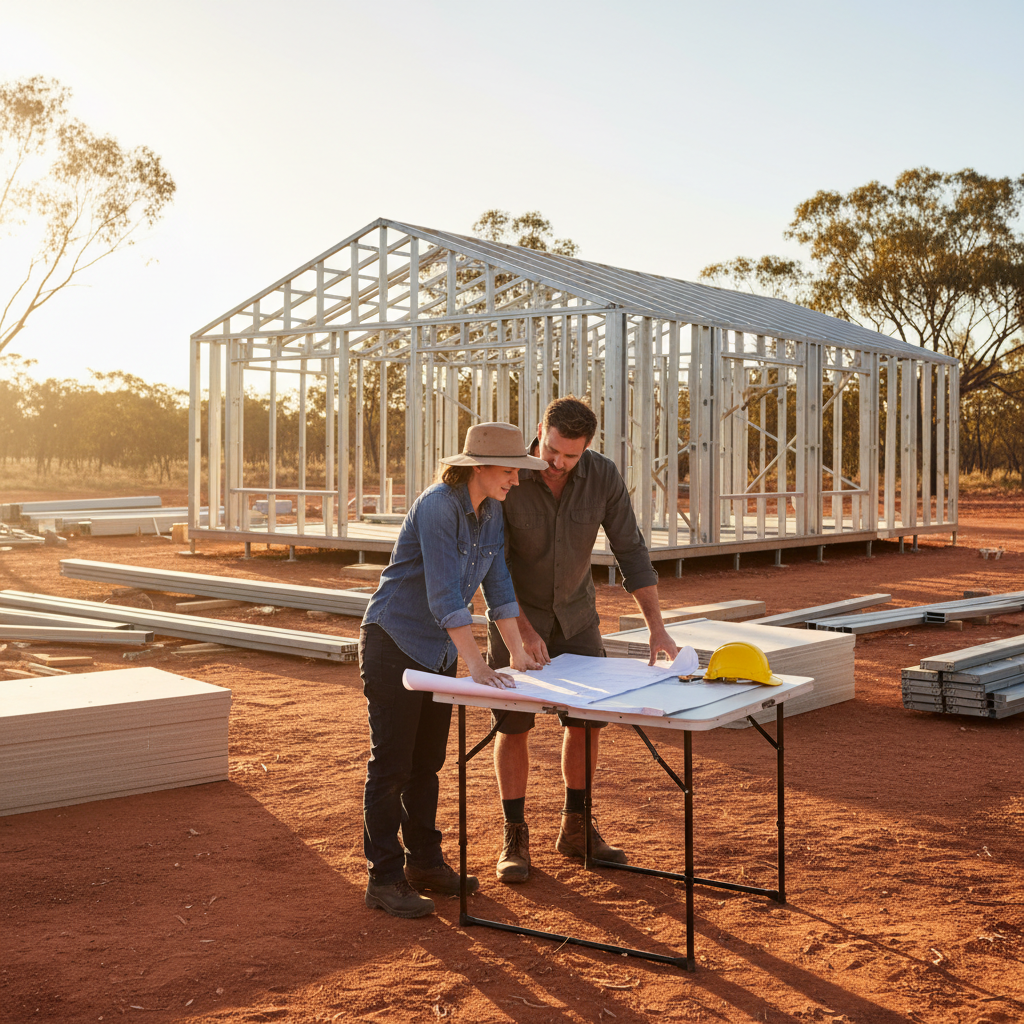
Being the boss of your own site means you can make these calls on the fly. When the frames arrive and you're standing there in the dirt, walk through the 'rooms'. Feel the space. That's when you'll realise that the guest bedroom has enough room for a deeper wardrobe, or that the hallway could handle a built-in bookshelf. Because our kits use BlueScope steel, once those frames are up and fixed, they aren't moving. You've got a rock-solid base to build your storage dreams on.
Just remember to keep your tape measure handy. I once saw a bloke frame up a magnificent walk-in robe only to realise his wife's long dresses wouldn't fit because he'd placed the hanging rod too low. Measure your actual stuff. Measure your ironing board. Measure your golf clubs. Build the house around your life, not the other way around. It takes a bit more brain power during the planning phase, but you'll thank yourself every time you find exactly what you're looking for without having to move three other things first.